Statewide Probate
Attorneys in Florida
Attorneys in Florida


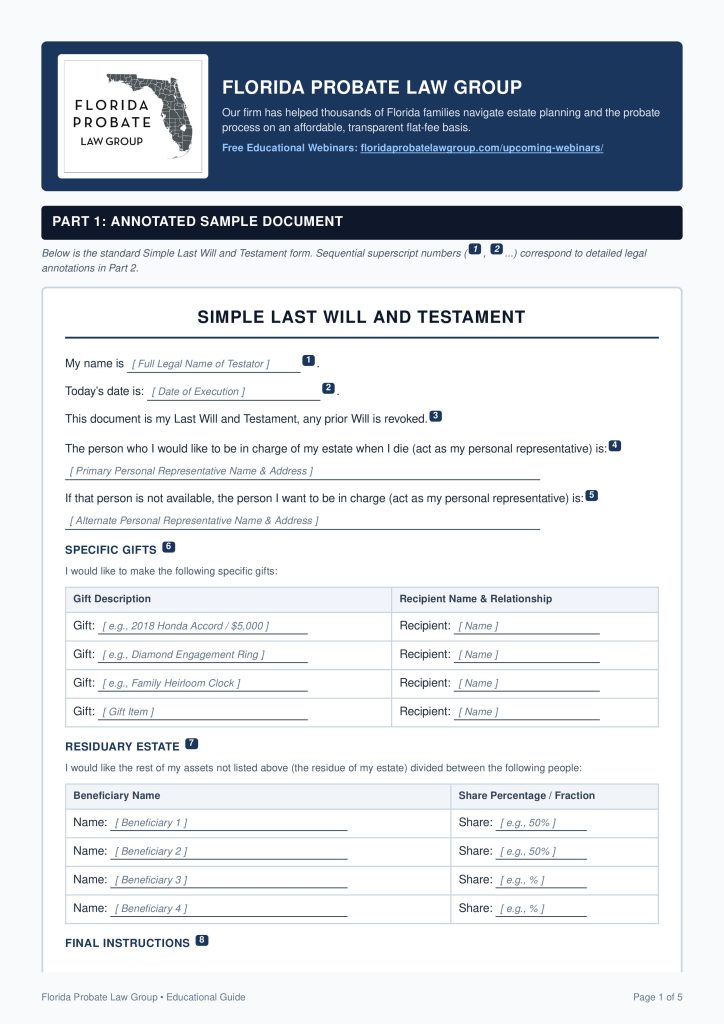
Because we have handled thousands of probate cases (after death), our firm has unique insight into consequences of failing to plan. We provide this simple Last Will and Testament entirely free as community service aimed at keeping Florida families protected. Our core practice specializes in Probate Court administration, focusing on helping families wrap up estates after a loss. Taking the time to plan for your death protects your family from expensive and stressful legal problems in the wake of your passing.
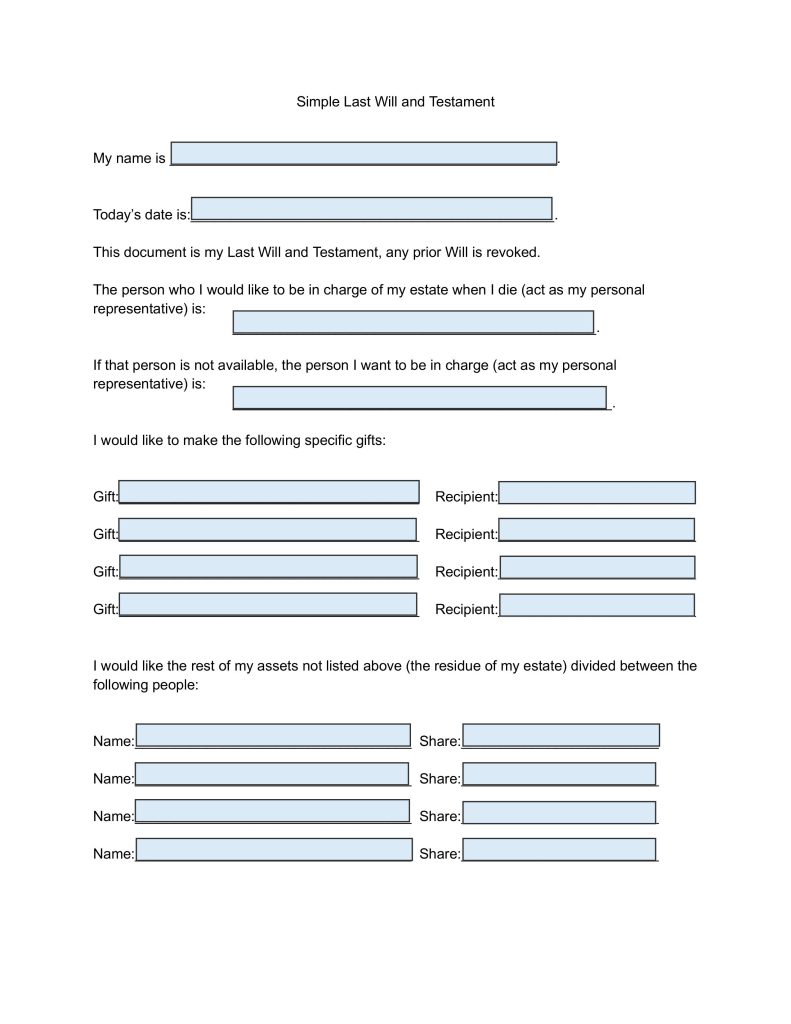
A Last Will and Testament is a legal document that dictates who receives your property after you pass away and names a Personal Representative who will oversee your final estate. Without a Will, Florida intestate laws decide who inherits your assets, and this may not align with your true wishes.
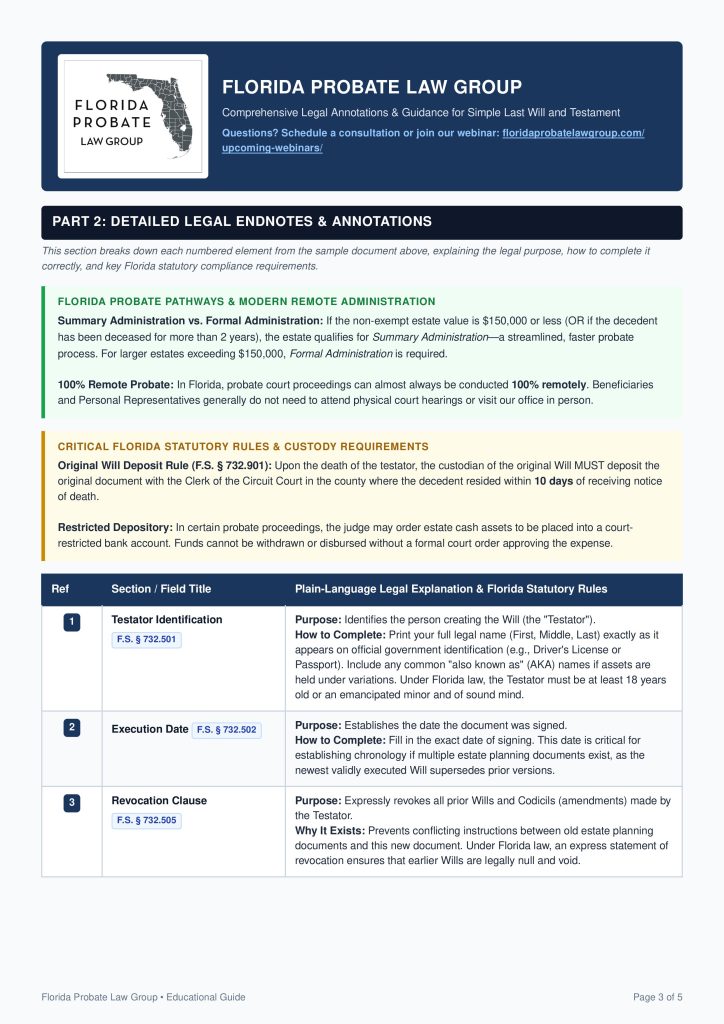
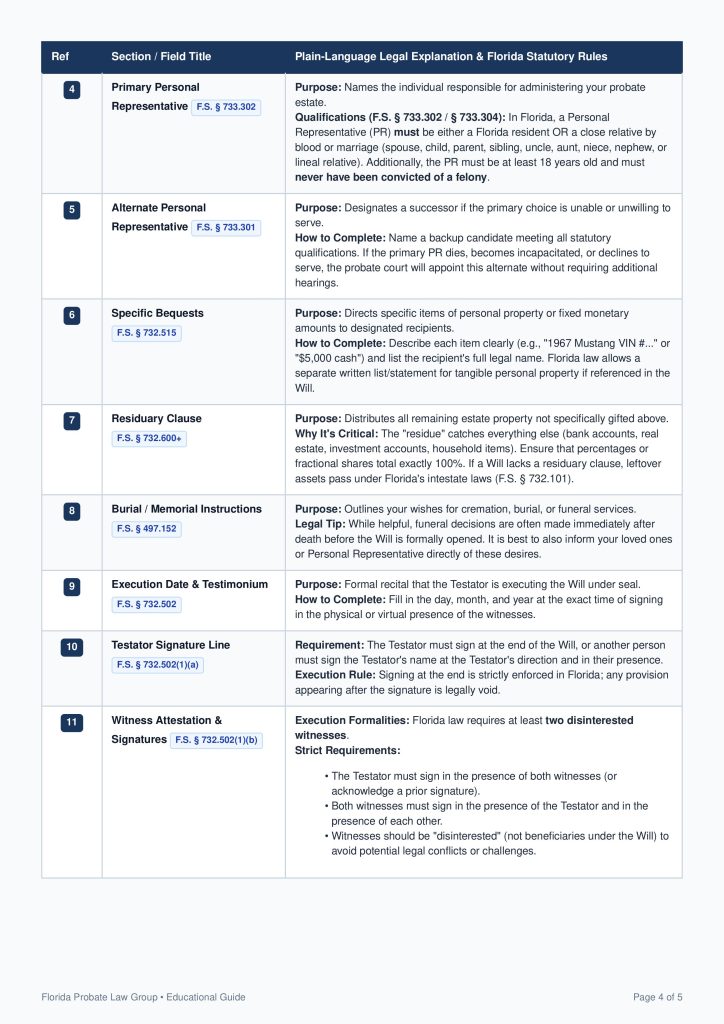
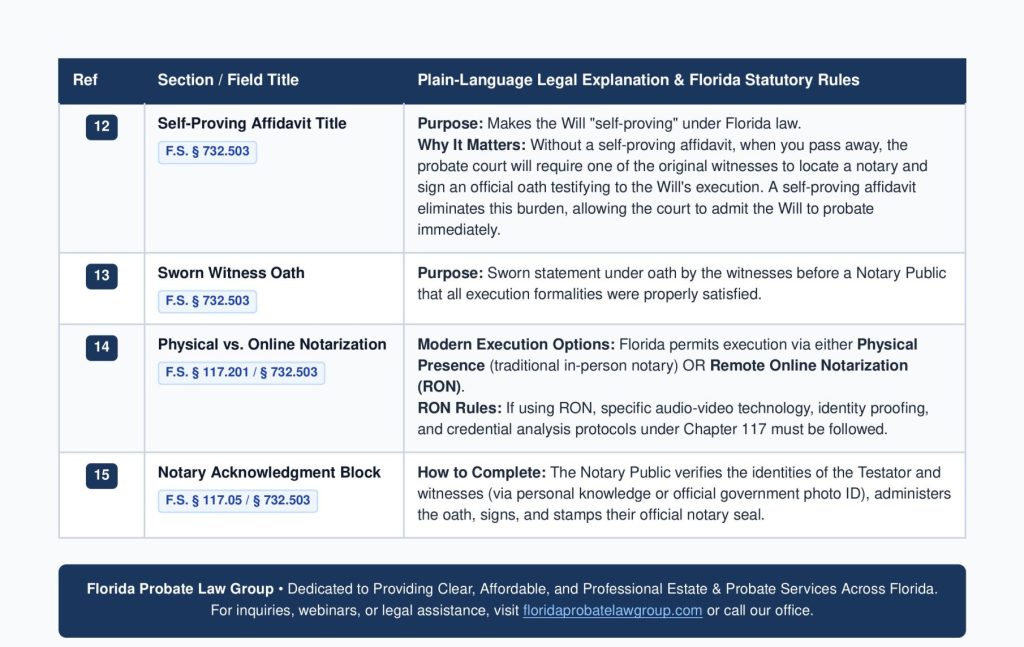
Core Statutory Rules & Requirements
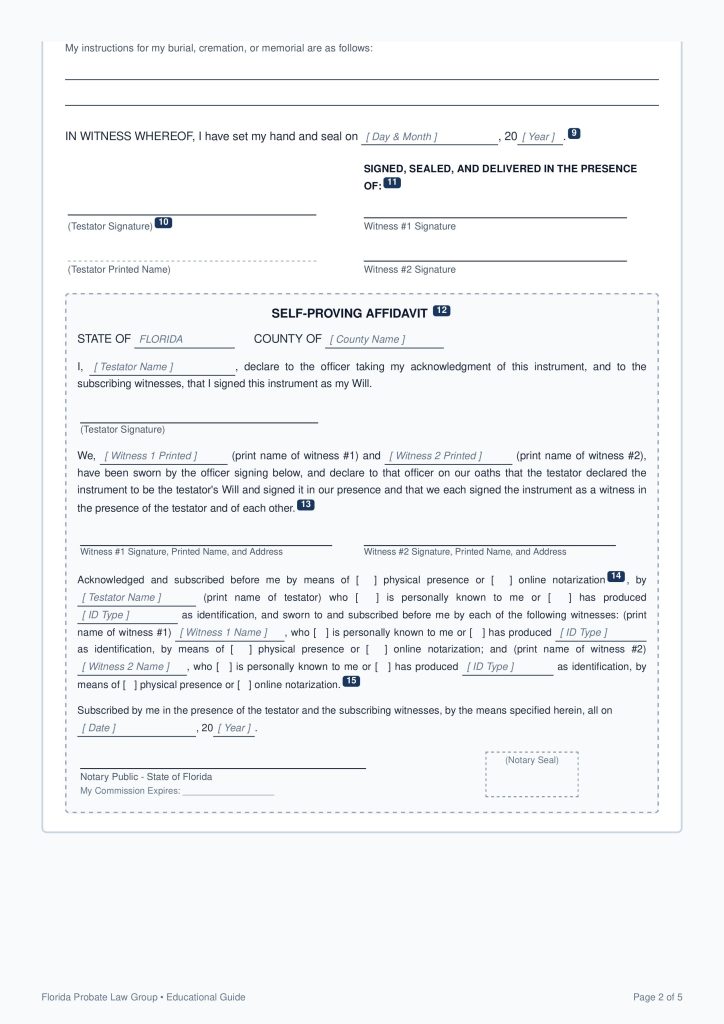
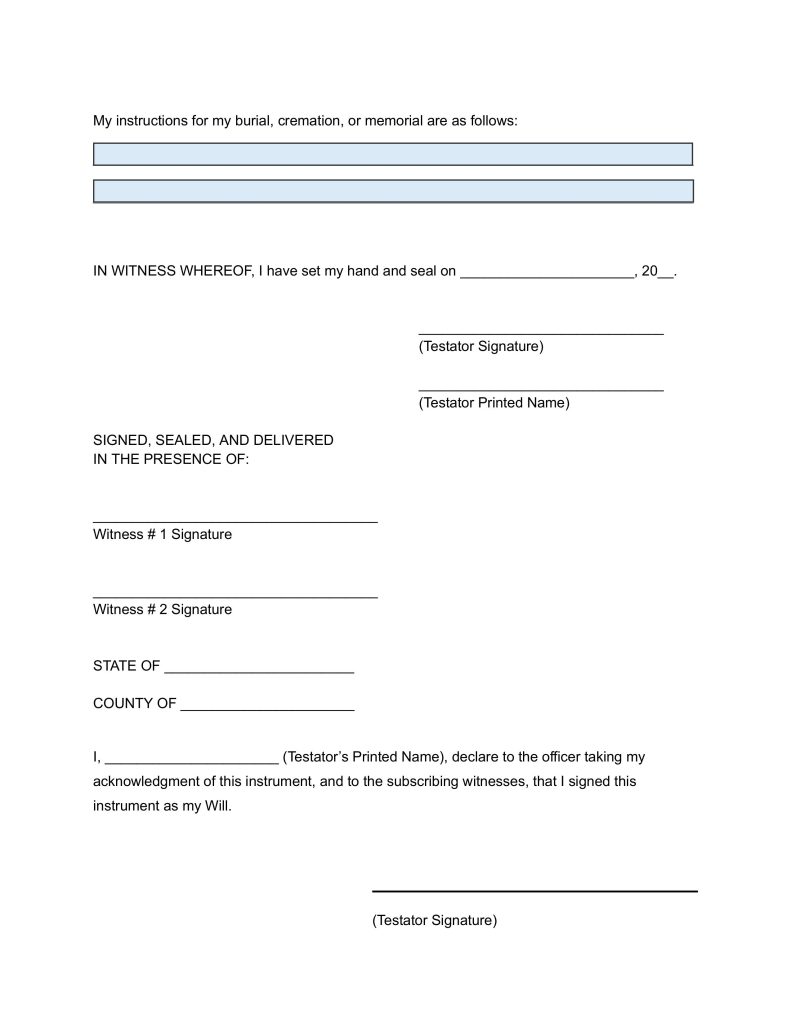
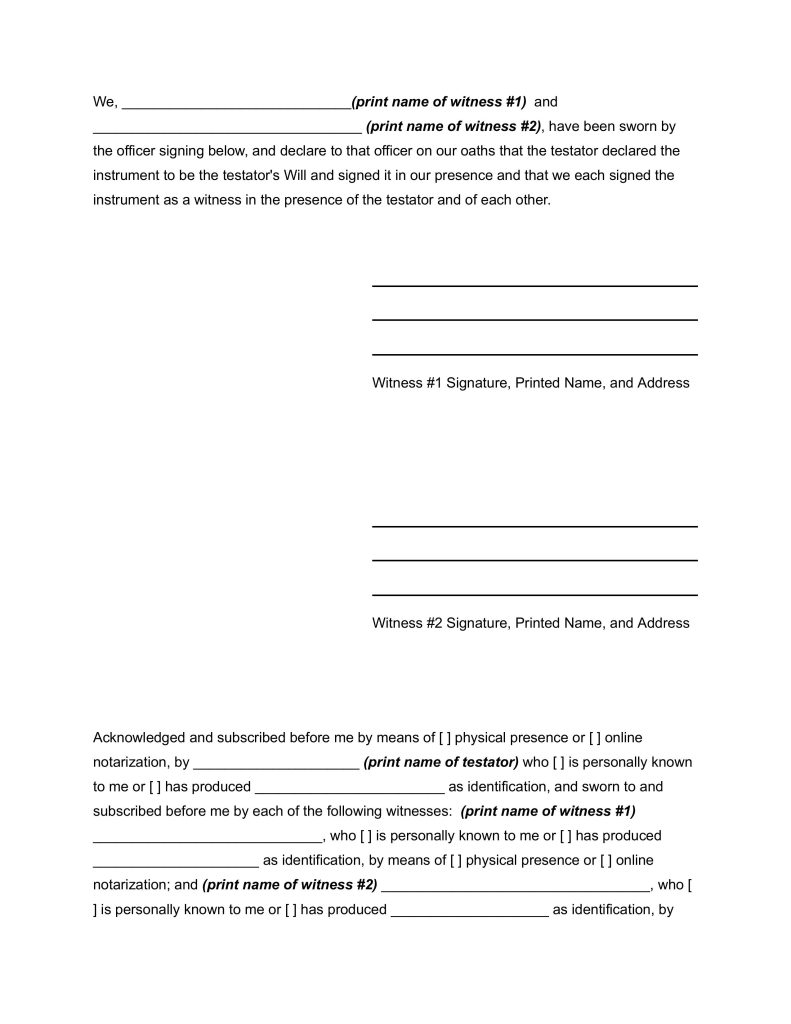
Key Structural Components of a Simple Will
Direct Download Links
Access ready to print and editable files directly below. NO paywalls OR email forms stand in your way of downloading these documents.
Full File PDF Download (traditional handwritten Signature):
Full File PDF Download (Electronic Signature/Document Custodian):
Voluntary Newsletter Sign-Up
You can stay protected over time as life and laws change. Join our list to receive direct access to ongoing educational material:
Ongoing Webinar Series
Our free forms offer a valuable utility, but improper execution, witnessing, or notarization renders them invalid. Our live interactive sessions will cover the exact steps you need to protect your assets, such as:
Click HERE to see upcoming live webinars where an attorney will explain these forms and answer questions.During our live webinars, we will share a QR code and link to our Google Business Profile. Leave a quick, 30-second review describing your experience with our free educational resources, and we will share directly in the Zoom chat our fully editable Microsoft Word template library. This library contains our complete Florida estate planning document compilation.
100% Remote Probate
When a loved one passes, handling their property and legal title requires clear and efficient guidance. Our founding partners and legal team have extensive experience navigating Florida probate courts, as detailed on our Lawyers Page. Court proceedings can almost always be conducted 100% remotely, meaning you will never need to visit a court or law office in person.
Our firm represents estates all throughout the state of Florida on an affordable flat-fee basis. We guide families through both of the primary forms of estate administration:
To learn more about court procedures, read The Complete Guide to Florida Probate or review the Florida Statutes and The Florida Bar resources.
Quick Reference Statutory Table & FAQ
| Florida Statute / Standard | Legal Requirement | Practical Impact on Estate Planning |
| F.S. § 732.501 | Testator Capacity | Ensures the person executing the Will is of sound mind and at least 18 years old. |
| F.S. § 732.502 | Execution Formalities | Requires signature at the end in the presence of two subscribing witnesses. |
| F.S. § 732.503 | Self-Proving Affidavit | Eliminates the need to track down witnesses to testify after death. |
| F.S. § 732.505 | Revocation of Prior Wills | Expressly revokes old estate documents to avoid conflicting instructions. |
| F.S. § 733.302 | Personal Representative Qualifications | Restricts who can manage an estate to Florida residents or close family members. |
| F.S. § 732.901 | Original Will Deposit Rule | Mandates original Will deposit with the Clerk of Court within 10 days of death notice. |