Fort Lauderdale Probate Lawyer & Attorney: Expert Broward County Estate Administration
Settling an estate in Fort Lauderdale requires a firm that understands the 17th Judicial Circuit — its digital filing requirements, its specific procedural rules, and the practical steps involved in moving a case from petition to final order. If you need a Fort Lauderdale probate attorney, Florida Probate Law Group handles every step of the process for families throughout Broward County, with no court visits required.
Fort Lauderdale Probate Attorney: Trusted Broward County Representation
Florida Probate Law Group is a probate-focused firm, not a general practice. That distinction matters. Our attorneys know the 17th Judicial Circuit’s filing system, its required forms, and the timelines judges expect. We handle both summary administration and formal administration for estates throughout Broward County, and we do it entirely remotely.
Our flat fee for probate administration in Fort Lauderdale starts at $3,500, a fixed number you know before we begin. There are no billing surprises and no percentage-of-estate charges. Families in Fort Lauderdale, Hollywood, Pembroke Pines, Coral Springs, and other Broward cities have relied on us to clear title to real estate, distribute assets, and close estates efficiently.
The entire process is handled 100% remotely. You don’t need to visit our office or the courthouse. We use the 17th Circuit’s digital calendar, electronic filing system, and the Zoom platform to manage everything from the initial petition through the final order.
Why Choose Our Fort Lauderdale Probate Lawyers?
17th Circuit Expertise: We know Broward County’s Mandatory Smart Form system, AI disclosure requirements, and the specific procedural expectations of this court. General practitioners often cause delays because they’re unfamiliar with local requirements.
Flat Fee Pricing, $3,500 for Summary Administration, $6,655 for Formal: You get a clear, written fee quote before we start. No hourly billing. No percentage of the estate. Just a fixed price for a defined scope of work.
100% Remote Service: You never need to appear in Fort Lauderdale. Every filing, hearing, and communication is handled digitally. This is especially valuable for out-of-state heirs dealing with a Broward County estate.
Fast Turnaround, 2 to 3 Months for Summary Administration: When documents are in order and there are no creditor disputes, eligible estates in Fort Lauderdale typically reach final order within 2 to 3 months of filing.
Probate-Only Practice: This is all we do. Our team doesn’t split its attention between divorce, criminal defense, and personal injury. Every case we take is a probate or guardianship matter.
Internal Judicial Insight: Founding partner R. Nadine David previously served as a Probate and Guardianship Staff Attorney, advising judges on the legal sufficiency of petitions. She knows what Broward judges look for in a filing and what gets rejected.
Fort Lauderdale Probate Court Information
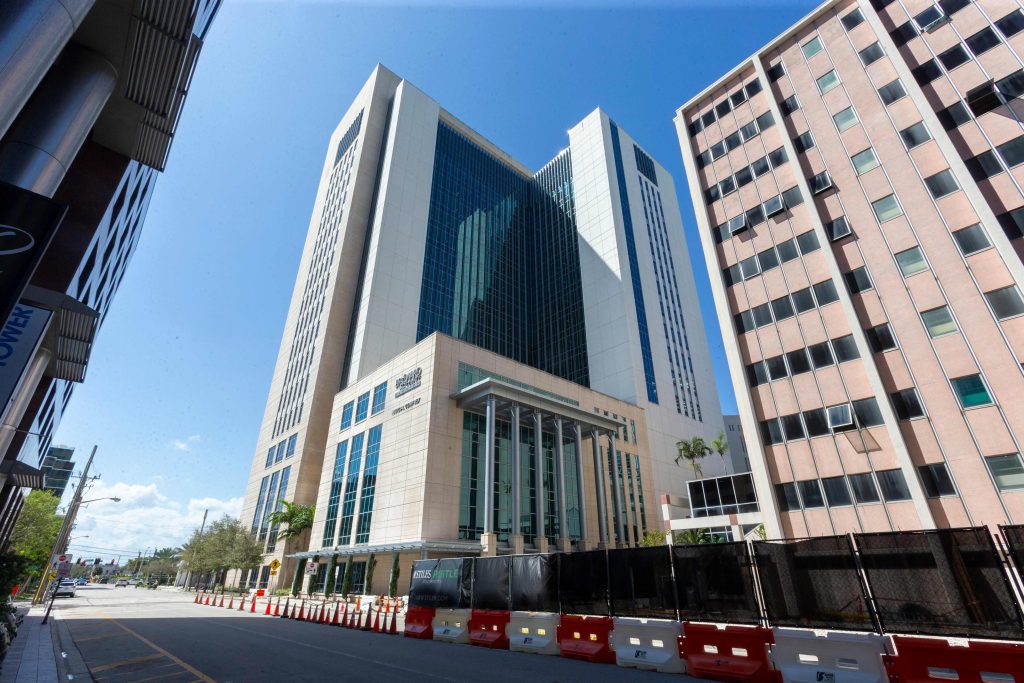
All Broward County probate matters are handled by the 17th Judicial Circuit of Florida, which sits at the Broward County Judicial Complex in downtown Fort Lauderdale. This is where your petition gets filed, reviewed, and ultimately decided by a probate judge.
Broward County Probate Division 201 SE 6th Street Fort Lauderdale, FL 33301 Phone: (954) 831-6565
The 17th Circuit has invested significantly in its digital infrastructure. All probate filings in Broward County are submitted electronically through the Florida Courts E-Filing Portal. The court also uses Mandatory Smart Forms for all petitions, pre-programmed PDF forms that auto-populate certain fields but require precise completion to avoid deficiency notices.
In 2026, the court implemented Administrative Order 2026-03-GEN, which requires attorneys to certify whether generative AI was used in drafting court documents. Florida Probate Law Group complies fully with this requirement and does not use AI for legal drafting; every petition we file is prepared by an attorney.
The good news for families dealing with an estate is that the court’s digital systems make remote handling practical. Routine hearings are conducted via Zoom, documents are filed electronically, and orders are issued digitally. Our firm handles all filings and communications with the Broward County probate court on your behalf; you receive updates from us, not from the clerk’s office.
Fort Lauderdale Neighborhoods & Cities We Serve
As a Fort Lauderdale probate attorney serving all of Broward County, we handle estates across every zip code in the county. Specific areas we regularly work with include:
Downtown Fort Lauderdale & Las Olas: High-rise condos, investment properties, and luxury estates along Las Olas Boulevard require careful handling of title and asset documentation.
Victoria Park & Coral Ridge: Historic neighborhoods with single-family homes often involving homestead determinations and title clearing for surviving family members.
Wilton Manors: Smaller estate values often qualify for summary administration, which we can complete for a flat $3,500 fee.
Lauderdale-by-the-Sea: Coastal properties and vacation condos frequently involve out-of-state heirs — our remote service model makes this straightforward. See our Lauderdale-by-the-Sea probate page for more details.
Hollywood & Hallandale Beach: Active retirement communities and multifamily properties. Our Hollywood probate attorney page covers specifics for this area.
Pembroke Pines & Miramar: Large suburban estates with multiple heirs. More information on our Pembroke Pines probate lawyer page.
Coral Springs & Parkland: Family-owned properties and business interests. See our dedicated Coral Springs probate attorney page.
Weston & Davie: Gated communities and larger estates that often require formal administration and formal homestead proceedings.
Fort Lauderdale is famous for its 165 miles of navigable canals and its status as a world-class international business center. This complexity extends to its legal system. When you file for probate in Fort Lauderdale, your case is handled at the Broward County Judicial Complex by the judges of the 17th Circuit.
The 17th Circuit processes thousands of probate filings each year. That volume has pushed the court to implement strict digital requirements, mandatory form standards, and tighter review processes. A petition that might pass through without comment in a smaller county circuit can receive a deficiency notice in Broward if a single field is incomplete or a required exhibit is missing.
Fort Lauderdale also has a high concentration of real estate assets in probate — from waterfront properties along its 165 miles of navigable canals to high-rise condominiums in the downtown corridor. Many of these properties involve homestead issues, co-ownership disputes, or title problems that require legal expertise to resolve before a sale or transfer can proceed.
17th Judicial Circuit Probate Procedures
Understanding how the 17th Circuit actually processes a probate case helps families know what to expect and why having an experienced Broward County probate lawyer matters from the start.
The Filing Process
All probate petitions in Broward County must be filed electronically through the Florida Courts E-Filing Portal. Paper filings are not accepted for attorney-filed cases. The court uses Mandatory Smart Forms, standardized PDF documents that must be completed precisely. These forms vary depending on the type of proceeding: summary administration, formal administration, or disposition of personal property without administration.
Once a petition is submitted, the clerk’s office reviews it for completeness and issues a case number. The petition is then assigned to a probate judge. In Broward County, that assignment happens through the court’s automated system. Routine uncontested matters often proceed without a hearing if all documentation is in order.
Required Documents
The specific documents required depend on the type of proceeding, but most Fort Lauderdale probate cases require the following:
Original death certificate (certified copy)
Original will (if any), Florida requires the original, not a photocopy
Petition for administration (using the 17th Circuit’s Mandatory Smart Form)
Oath of personal representative
Designation of resident agent (if the personal representative lives outside Florida)
Certified property appraisals or documentation of asset values
Proof of service on all known creditors and interested persons
Proof of publication in a local newspaper (for formal administration)
Missing or incorrectly formatted documents are the most common reason cases receive deficiency notices. The clerk’s office issues these notices electronically, and you typically have a short window to cure the deficiency before the case stalls.
Common Delays and How to Avoid Them
Most delays in Broward County probate stem from a handful of predictable problems:
Incomplete Smart Forms: The 17th Circuit’s Mandatory Smart Forms have specific required fields. Leaving a field blank or using the wrong form version triggers an automatic deficiency notice.
Missing original will: Florida courts require the original will, not a copy. Families who have misplaced the original face an additional court proceeding to establish the will’s contents.
Failure to identify all interested persons: Every heir, beneficiary, and creditor with a legal interest in the estate must be properly noticed. Omitting someone can void the final order.
Homestead issues: Broward County has a high volume of homestead properties. If a decedent owned a homestead, the court requires a specific homestead determination before the property can be transferred. This adds a procedural step that catches families off guard.
Creditor publication window: Formal administration requires a 90-day creditor claim period following newspaper publication. This clock doesn’t start until publication actually occurs; delays in publication push back the entire timeline.
Working with a Fort Lauderdale probate attorney who knows Broward County procedures means these issues get addressed before they become delays. We review every file for completeness before it’s filed and track all deadlines so nothing falls through the cracks.
Fort Lauderdale vs. Miami Probate: What’s Different?
Families dealing with a Broward County estate sometimes wonder whether to hire a Fort Lauderdale probate lawyer or a Miami attorney who might be geographically closer. The answer matters more than you’d expect. Broward and Miami-Dade probate are handled by different courts with different procedures, different forms, and different timelines.
Different Courts, Different Rules
Miami-Dade probate is handled by the 11th Judicial Circuit. Fort Lauderdale probate is handled by the 17th Judicial Circuit. These are separate court systems with their own administrative orders, form requirements, and judge assignments. A Miami attorney who files in Broward County faces the same learning curve as any out-of-county practitioner.
The 17th Circuit has specific Mandatory Smart Forms that differ from the forms used in Miami-Dade. It has its own AI disclosure rule (Administrative Order 2026-03-GEN), its own hearing calendar procedures, and its own preferences for how supporting documents should be organized and submitted.
Timelines Differ Too
Miami-Dade is one of the busiest probate courts in Florida. Case volume in the 11th Circuit is high, and wait times for hearings and order processing reflect that. The 17th Circuit in Broward County operates at its own pace, generally comparable in volume but with slightly different scheduling dynamics.
For families managing a Fort Lauderdale estate, the practical advantage of working with a probate attorney Fort Lauderdale clients trust is that your attorney already knows the local calendar, the assigned judges, and the specific filing requirements. There’s no learning curve, no guessing which forms apply, and no risk of court rejection because someone used the wrong circuit’s paperwork.
Asset Types Differ by Geography
Fort Lauderdale estates frequently involve canal-front homes, marina slips, and waterfront investment properties; asset types that require specific valuation approaches and may trigger homestead analysis. Miami-Dade estates more commonly involve commercial properties, international accounts, and high-rise condominiums in the coastal corridors.
A Broward probate lawyer who handles these estate types regularly has seen the specific documentation issues that come up with Fort Lauderdale waterfront properties, HOA-governed communities, and Broward County title requirements. That familiarity speeds up the process and reduces the risk of costly mistakes.
The Florida Probate Law Group Advantage
100% Remote Administration: You never have to deal with the traffic on I-95 or find parking at the downtown Judicial Complex. We utilize the 17th Circuit’s digital calendar and virtual hearing systems to manage the entire process. You can fulfill your duties as a Personal Representative entirely from your home.
The Bo Diddley Victory: Our firm’s reputation for elite results is built on high-stakes success. Founding partner Charles “Cary” David successfully led the trust litigation for the family of rock and roll pioneer Bo Diddley, returning his legacy and music rights to his 18 rightful heirs. We bring that same level of tenacity and legal precision to every Fort Lauderdale family we represent.
Predictable Flat Fees: Broward County estates can be complex, but your legal fees shouldn’t be. For uncontested probate matters, we offer all-inclusive flat fees. Unlike many South Florida firms that charge a percentage of the estate (often 3%), we provide a transparent, upfront quote.
Internal Judicial Insight: Founding partner R. Nadine David brings a unique perspective as a former Probate and Guardianship Staff Attorney. Having advised judges on the legal sufficiency of thousands of petitions, she knows exactly what Broward County probate judges look for in a filing.
Broward County Probate FAQs
How much does probate cost in Fort Lauderdale?
Florida Probate Law Group charges a flat fee of $3,500 for summary administration in Fort Lauderdale and throughout Broward County. Formal administration is priced separately based on estate complexity. Court filing fees are additional and typically range from $300 to $400, depending on the estate value. We provide a written fee quote before you commit to anything. Many South Florida firms bill a percentage of the estate’s gross value; typically, 3% under Florida’s statutory fee schedule. On a $500,000 estate, that’s $15,000 in attorney fees. Our flat-fee model is almost always significantly less for straightforward estates.
Where is the Broward County probate court?
The Broward County Probate Division is located at the Broward County Judicial Complex, 201 SE 6th Street, Fort Lauderdale, FL 33301. The main probate line is (954) 831-6565. All cases in Broward County fall under the 17th Judicial Circuit of Florida. In practice, most families never need to visit the courthouse. All filings go through the Florida Courts E-Filing Portal, and routine hearings take place via Zoom. Our Fort Lauderdale probate attorney team handles all interactions with the court on your behalf.
Do I need a Fort Lauderdale probate attorney?
For formal administration, yes, Florida law requires an attorney to represent a personal representative in formal probate proceedings. You can’t file these petitions on your own behalf as an executor. For summary administration, there’s technically no legal requirement to hire an attorney, but attempting to navigate the 17th Circuit’s Mandatory Smart Forms without guidance is a common source of costly errors. The Broward County clerk’s office issues deficiency notices for incomplete or incorrectly formatted petitions, and each deficiency delays the case. Most families find that hiring a Fort Lauderdale probate lawyer upfront costs less in time and stress than fixing mistakes after the fact.
How long does Fort Lauderdale probate take?
Summary administration in Fort Lauderdale typically takes 2 to 3 months from the date of filing, assuming all documents are complete and there are no creditor disputes. Formal administration generally takes 6 to 12 months due to the mandatory 90-day creditor publication period and additional court hearings required. Cases involving will contests, missing heirs, disputed assets, or real estate title problems take longer. We’ll give you an honest timeline estimate during your free consultation based on the specifics of your estate.
Can I handle Broward probate remotely?
Yes, completely. The 17th Circuit operates a fully digital filing and hearing system. Florida Probate Law Group manages the entire process on your behalf from start to finish. Our clients include heirs and personal representatives living in other Florida cities, other states, and even other countries who have inherited property in Broward County. You’ll receive regular updates from us as the case progresses, and you’ll sign documents electronically. You never need to visit Fort Lauderdale or our office. That’s by design; it’s how our Fort Lauderdale probate lawyer team operates for every client.
What is summary administration and does my estate qualify?
Summary administration is a simplified probate process available in Florida when either the estate’s non-exempt assets are valued at $150,000 or less, or the decedent has been dead for more than two years. It’s significantly faster and less expensive than formal administration. Summary administration does not require a personal representative appointment. Instead, the court issues a summary order that directs how assets should be distributed. Our flat fee of $3,500 covers summary administration from petition to final order. If your estate qualifies, it’s almost always the right choice. Not sure if yours qualifies? We’ll review the assets with you during a free consultation.
What is a homestead determination, and why does it matter?
In Florida, a decedent’s primary residence may qualify as a “homestead” property under the Florida Constitution. Homestead property receives special protections; it can’t be sold to pay most creditors, and it must pass to specific family members according to Florida law (not just the will, in some cases). In Broward County, the probate court requires a separate homestead determination proceeding before a homestead property can be transferred or sold. This is a step that surprises many families who weren’t expecting it. As a Fort Lauderdale probate attorney team handling Broward County estates regularly, we factor homestead analysis into every estate review from day one.
What happens if there’s no will?
If the decedent died without a will, what Florida law calls “intestate,” the estate is distributed according to Florida’s intestacy statutes. The order of priority generally runs: surviving spouse, children, parents, siblings, and more distant relatives. There’s no will to interpret, but there is still a probate process to complete. Intestate estates in Broward County follow the same court process as estates with a will. A personal representative must still be appointed, assets must still be inventoried, and creditors must still be properly addressed. The Broward County Probate Court Guide has additional details on intestate proceedings.
Can creditors take everything from a Fort Lauderdale estate?
Not necessarily. Florida law provides significant protections for estates, including the homestead exemption, a $20,000 family allowance, a $1,000 personal property exemption, and exempt assets like life insurance proceeds paid to named beneficiaries and retirement accounts with designated beneficiaries. Creditors have a limited window to file claims in a Florida probate case, generally 30 days after receiving direct notice, or 90 days after the first publication of the notice to creditors, whichever is later. Claims filed after that deadline are typically barred. A Broward probate lawyer can help ensure the creditor notice process is handled correctly so the deadline runs and old debts don’t haunt the estate indefinitely.
How do I get started with a Fort Lauderdale probate attorney?
The first step is a free consultation. We’ll review the basic facts of the estate, what assets are involved, whether there’s a will, the approximate value of the estate, and the names of heirs and beneficiaries. Based on that, we’ll tell you whether summary or formal administration applies, give you a flat-fee quote, and explain what happens next. You can call us at (352) 354-2654 or fill out the contact form on this page. We respond to all consultation requests promptly, and we’re used to working with families who are navigating probate for the first time. There’s no pressure and no commitment required for an initial consultation.
Speak with a Fort Lauderdale Probate Attorney Today
Probate doesn’t have to be overwhelming. Most Broward County estates move through the process smoothly when they’re handled correctly from the start, with the right forms, the right notices, and a clear understanding of what each step requires.
Florida Probate Law Group is a probate attorney Fort Lauderdale families trust for straightforward, flat-fee estate administration. We handle the court filings, the deadlines, the creditor process, and the final order — all remotely, all for a predictable fee.
If you’ve recently lost a loved one and need to open a probate case in Fort Lauderdale or anywhere in Broward County, call us at (352) 354-2654 or use the contact form on this page to schedule a free consultation. We’ll tell you exactly what your estate needs, what it will cost, and how long it should take.
Ready to get started? Call (352) 354-2654 for a free consultation with a Fort Lauderdale probate attorney. No office visit required. 100% remote service. Flat fee of $3,500 for qualifying summary administration estates.
Broward County Judicial Complex located at 201 S.E. 6th Street Fort Lauderdale, FL 33301
I was very happy with her response to my questions and concerns about Florida probate. I am in Ohio and was not familiar with the process but they cleared everything up for me and made me feel comfortable going through the probate process with my loved ones will.
Roger
Honest and straight forward assessment of complex case. My case span both federal and state issues, as well as civil case of fraud which maybe criminal fraud. He told me what he could do, what his limits of scope were and what my best/safest position should be and gave me an outline of how to get...
S. Todd
The world of probate can be fairly daunting for one who has little to no experience. Between trying to figure out what to file and when to file, there is also the where. I was quite relieved to have Nadine and Cary to guide me through the court process.
Michael O.
I highly recommend using this law group for your Florida probate needs, and in particular, Charles David. He explained clearly what my 91 year old aunt would need to do in order to sell property that was in hers and her late husband's name.
Patti T.
Florida probate law group,was very helpful in answering the many questions that I had concerning my situation their input was very appreciated thank you.